Showing posts with label Hydroponic Green Fodder. Show all posts

Sunday, 10 May 2015

What Is Alfaculture Or Hydroponic Green Fodder

UT8lWPeXaBdXXagOFbXV (1)Alfaculture is also known as Hydroponic green fodder. Also, the generation of hydroponic green foods or Alfaculture is one such route through which you can adequately develop and produce the right nourish for your animals. The healthful advantages of hydroponic green grains (grew grains) are best fit for all animals including, sheep, cows, steeds, goats, chickens, that give animals enhanced development and general wellbeing.

Hydroponics innovation has come up to develop grub for homestead creatures, as a distinct option for routine technique for green feed creation. It is a very much acknowledged truth that encouraging dairy creatures is fragmented without incorporating green grain in their eating regimen.

The word hydroponics has been gotten from the Greek word 'water working'. Hydro signifies "water" and ponic signifies "working" and it is an innovation of developing plants without soil, yet in water or supplement rich answer for a brief time. The hydroponics green grub creation unit comprises of a nursery and a control unit.

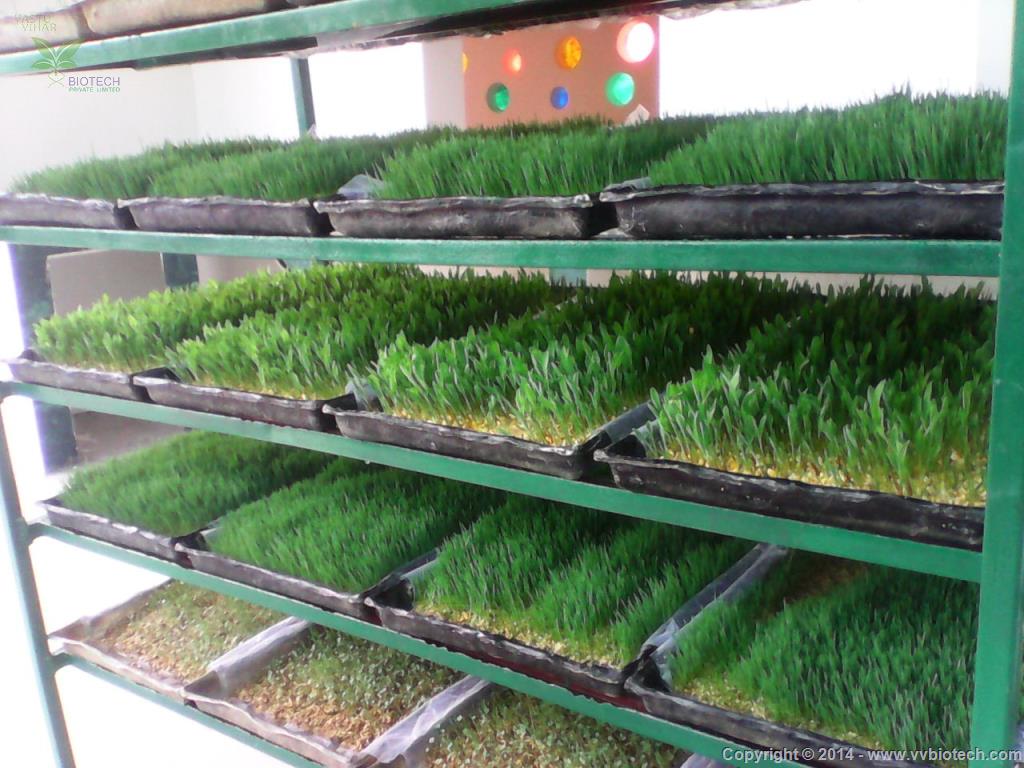
The span of the green house is more or less 25 feet (length) x 10 feet (width) x 10 feet (stature) and can possibly create 600 kg of green grain every day in seven days. Inside the green house, racks are available and every rack contains various lines, in which plate containing doused seeds are suited. Channels containing miniaturized scale foggers are fitted simply over the plate for water hazing, which eventually keeps up the nursery mugginess.
hydroponic-organic-fodder-farming-vvbiotech-bodhgaya-sikkim-bihar-bodhgayaDistinctive sorts of grub like maize, wheat, cow pea, and so forth can be developed by hydroponics innovation. Feed sprouts are delicate and youthful, the likeness crisp green grass. In that capacity, they are exceedingly satisfactory and nutritious to different kinds and classes of domesticated animals. On a dry matter premise, hydroponic grain contrasts positively and different nutritious feedstuffs.

Alfaculture has a higher nutritious value than the customary green grub. In the circumstances where grains can't be developed; agriculturists can deliver hydroponics green feed for their creatures.

Sunday, 19 April 2015

Alfaculture- Innovative Technology For Production Of Hydroponic Green Fodder

VBK-AGRI_124842f-636x375Hydroponic green fodder production or Alfculture is the most viable option for feeding sheep, goats and other livestock. The interest worldwide is increasing for hydroponic fodder as a feedstuff for sheep, goats, and other livestock. As all are aware of, Hyroponics is the science of soilless farming; it is the method of growing plants without soil. Only moisture and nutrients are provided to the growing plants. Hydroponic growing systems produce a greater yield over a shorter period of time in a smaller area than traditionally-grown crops.

Hydroponic green fodder production system or Alfaculture is a year-round growing system that produces a consistent quantity and quality of livestock feed or green fodders regardless of weather conditions.
Alfaculture units are usually used to sprout cereal grains, such as barley, oats, wheat, sorghum, and corn, or legumes, such as alfalfa, clover, or cow peas. Barley is the most commonly grown forage, because it usually gives the best yield of nutrients.

Alfaculture units usually consist of a framework of shelves on which metal or plastic trays are stacked. After soaking overnight, a layer of seeds is spread over the base of the trays. During the growing period, the seeds are kept moist, but not saturated. They are supplied with moisture and nutrients, usually via drip or spray irrigation. Holes in the trays facilitate drainage and the waste water is collected in a tank.

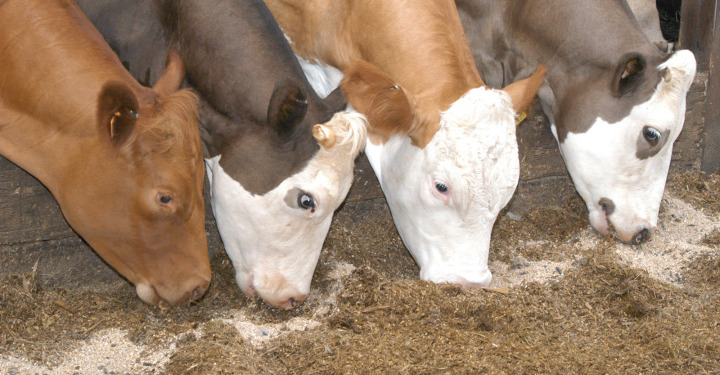
livestock_feed2-720x375The seeds will usually sprout within 24 hours and in 5 to 8 days have produced a 6 to 8 inch high grass mat. After the mat is removed from the tray, it can go into a feed mixer or be hand-fed to livestock. Livestock will eat the whole thing: seeds, roots, and grass. There is minimal waste.

Alfaculture units can be set up in any building, including a garage or basement, a greenhouse is ideal because temperature, light, and humidity can be precisely controlled. Efficient, year-round production of green fodder is possible under optimal environmental conditions; approximately 70°F, 60 percent humidity, and 16 hours of light can produce maximum yields.

Monday, 13 April 2015

Why Hydroponic Green Fodders are the best choice for livestock animals

Green fodders produced by growing seeds without soil but in water or nutrients rich solutions are known as hydroponics green fodder and the production method is termed as Alfaculture. Hydroponics green fodder production or Alfaculture is a method of cultivating livestock feed mostly in green houses under controlled environment, in nutrient rich water.

http://alfaculture.com/wp-content/uploads/2015/02/water-saving-in-hydroponics.jpgGreen fodders are staple feed for dairy animals. Dairy animals producing up to5-7 liters milk per day can be maintained exclusively by feeding green fodders. Inclusion of green fodders in ration of dairy animals decreases amount of concentrate feeding and thus increases profit. Therefore, for economical and sustainable dairy farming, fodder production round the year is highly essential.

Green fodder produced in an Alaculture system would have many benefits as it is capable to fulfill bulk of animal easily and quickly, hydroponic green fodders are a major source of vegetable protein, it is a good source of carbohydrate (soluble and fibrous) and good source of minerals. Hydroponic green fodders are rich in essential vitamins and a good source of water (approx. 15-25% water).

The Alfaculture units are built with a greenhouse (for growth of fodder) and a control unit, (for regulation of light, temperature, humidity and water) for optimum growth of fodder. And generally in an Alfaculture system, fodders are grown in trays in 7 days cycle excluding the day for seed soaking.

http://alfaculture.com/wp-content/uploads/2014/10/hydroponics-720x375.jpgIn comparison to conventional green fodders, hydroponics green fodders contain more protein, fat (ether extract) and soluble carbohydrates (nitrogen free extract); but less fiber, total ash and acid insoluble ash.

Feeding of hydroponics green fodder produced in Alfaculture units are more beneficial to all livestock due to their high nutritional values. Green fodders are highly succulent and relished by dairy animals. For instance; 7-8Kgs of Alfaculture maize green fodder can replace one kg concentrate mixture fodder. As it is highly succulent, it is recommended to offer maximum 20 kg hydroponic green fodder per day per animal.

Tuesday, 14 October 2014

Hydroponic Green Fodder – For the Overall Wellbeing of Your Animals

It’s a well-accepted reality that feeding dairy animals is absolutely incomplete without incorporating green food in their diet schedule.Feeding is the most important factor in successful livestock farming. However, the foremost stipulations in yield of green fodder are limited land dimension for fodder cultivation, lack of water, more labor requisite, non-accessibility of same quality green food throughout the year, necessity of fertilizer or manure and natural disasters. As a substitute to the traditional procedure of green fodder creation, alfaculture- the hydroponic technology for livestock fodder production is available.

mimic3


Different kinds of fodder such as cow pea, wheat, maize, etc. can be grown via hydroponic technology. The produce of the hydroponic green fodder is greatly influenced by the quality and type of seed, purity and hygienic state of the green house. Hydroponic fodders are more wholesome compared to the traditional green fodder. In the circumstances where fodders can’t be cultivated, farmers can yield hydroponic green fodders for their livestock.

Though the hydroponic technique is not new to the world, it has started to notice a renaissance globally as water & growing problems turns out to be more widespread. With several regions of the globe experiencing record drought and water becoming more of a worry for a lot of individuals and businesses that own & raise farm animals, looking for options' & solutions to retain the wellbeing and development of their animals could be a challenge.

As a sustainable solution to excessive droughts, many commercial organizations have been built up. These organizations provide large-scale systems that are capable of producing many tons of hydroponic fodder per day and provide new alternatives for ranchers' & livestock producers. Not only hydroponic fodder methods use less water compared to field hay, but they provide several other benefits, comprising a higher yield through improved nutritional value.

While looking for starting a farmstead or beginning to domesticate livestock for personal use or as a business venture, the nutritional requirements of the animals being domesticated will become a crucial issue in the workload & expenditure of a business. Feed accessibility, price and quality are all permanent concerns. Other problems of livestock care could be decreased, with proper supplementation and nutrition at the front.

One can offer an excellent source of nourishment to a wide array of livestock and have the capability to locally obtain an on-demand feedstock through alfaculture- a method of growing fodder hydroponically.