Wednesday, 28 January 2015

5 Advantages of Urban Farming

Also known as urban agriculture, urban farming is a way for urban inhabitants to produce their own food, or have access to local foodstuffs. The tradition of urban farming is growing in fame in urban regions across North America. With the several advantages of urban agriculture and all that local food production has to provide, it is essential that we carry on to spread consciousness regarding how communities and individuals can institute a base of enhanced health, social communications, and economic opulence.

Here we’ll have a look at 5 advantages of urban agriculture:

meat-market-trends-346x154• Improves food-safety – food safety is having access to and being able to afford wholesome, safe foodstuff – and enough of it. This is a main worry for several households worldwide. Fortunately, urban agriculture contributes to better food security.

• Makes a sense of belonging – urban agriculture is 1 means to bring urban inhabitants together to institute a sense of community amongst people otherwise self-governing and, in several cases, isolated.

• Produces wholesome food – you get healthier, fresher food, herbs, fruits and vegetables – and are more likely to eat what is in the season, when you eat what is produced on an urban farm.

• Offers a learning prospect – urban farms offer city inhabitants an opportunity to grow their own foodstuff, and learn in the process. They can also learn about different gardening methods, the best mineral solutions, needed sunbeams, and controlling heat, among other things.

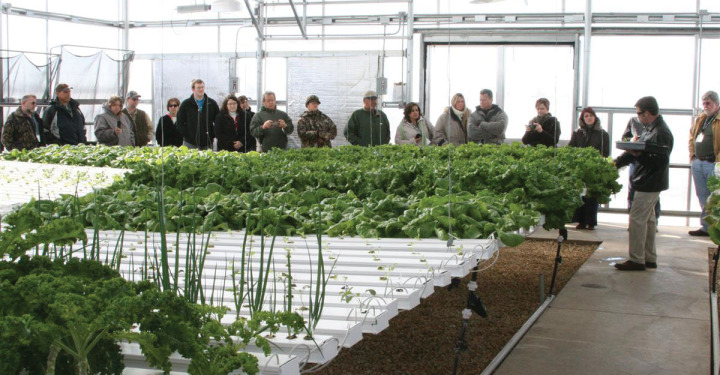
• Makes effective use of land – you can effectively make use of the land you do have to feed the people. Consider vertical or rooftop gardens: they take up minimum space but produce loads of fresh, wholesome food. Several hydroponic systems are installed perpendicularly, to fit anywhere you want even indoors!

Thursday, 22 January 2015

How to Prevent Plant Stress for a Better Yield

Both plants and humans have several similar characteristics. They require stability to work in their best levels. This comprises consistent health condition and limited stress agents. Yes, plants do get stressed like human being. If growing states are altered a little, plants can be sent into shock, become noxious, or will just gradually wither away.

To stop plants from getting stressed, it is essential to establish an appropriate growing environment from the very beginning. This is a proactive means to make sure the best plant growth possible. It is particularly essential for growing food-producing plants, because your garden must be considered an investment. By restoring your hydroponic garden back to a secure environment, you can make your plant stress free.

Signs of plant stress:
 hydroponics-system-for-tomatoes
• Dark patches
• Bleaches spots
• Wilting leaves
• No blooming
• Ragged leaves
• Dried edges on leaves

How to avoid plant stress:

The most ideal means to distress your plant is to maintain a secure growing environment. This must comprise:
• Maintain water, temperature & pH at a constant level
• Ignore breaking roots and take away dead leaves on a regular basis.
• Not keeping plant under too high or low light intensity
• Maintaining proper nutrient levels
• Maintaining appropriate ventilation, humidity and temperature levels.
• Preventing mold and pests and controlling them instantly as they appear, stressed plant encourages further growth of pests & diseases
• Ensuring appropriate Co2 levels are accessible for plant to perform photosynthesis.

sustainable-agriculture_6499_600x450By adding natural bio-stimulants to your Hydroponic nutrient solution, you will assist your plant in several ways. You will aid plant roots better nourish the nutrient solution and improve the plants’ plant’s resistance to bugs & diseases. Both of these enhancements will better repare your plants to deal with stress. These enhanced conditions also guide to greater yields.

Wednesday, 21 January 2015

Guide to Clean Your Hydroponic System

Gowing your food indoors employing hydroponic gardening systems provide several benefits. Primarily, you’ll generally yield healthier plants in a quick manner. The indoor setting provides your plants a secure and sheltered sanctuary where proper growing conditions can be accomplished.

hydroponics-346x154Yet, despite the several advantages of hydroponic growing indoors, as the cultivator, you should still be aware of investing the proper amount of cleaning time into the hydroponic system itself. A dirty system will over time harm your plant’s health because of the prospective build-up of mold, bacteria and algae. The ideal way to deal with this potential issue is to get into a schedule of cleaning your hydroponics system on a regular basis.

Here are few simple steps to sanitize your hydroponic system:
 
• Take away plants – start off by taking away your plants from the hydroponic system. Uproot them into a detach reservoir, preferably with the same grow medium, pH levels and nutrient solution. Reproducing the plants’ home is the ideal way to make sure your plants do not go into shock after taken out of their setting.

• Disinfect the system – you will wish to dirt-free your hydroponic systems’ tank as well as the parts by cleansing the system with the help of a cleaning agent. You can find hydroponic cleaning solution online or at your local hydroponic shop. Several cultivators also prefer to employ a diluted bleach blend to clean their hydroponics system. However, you should always go with natural cleaning products when it comes to cleaning your hydroponic system.

Hydroponic-salad1-720x375• Soak & wash – after the hydroponic system has been cleaned with the cleaning solution for about twenty-four hours, you will wish to rinse it out with unpolluted water. Circulate cleaned water through the hydroponic system for at least 1 to 2 fifteen-minute cycles. Throw away the water to rinse away any remaining cleansing solution deposit.

• After you have cleansed and rinsed your hydroponic system, you can start to return your plants into their habitat. Re-establish your grow medium and trigger your system as normal. Keep an eye on your plants for any symptom of stress or shock for the next day or so.

Every hydroponic system is diverse, but you may wish to get into the practice of sanitizing your system every month or so. You may also choose to dirt-free your hydroponics system in between plant growth phases.

Wednesday, 14 January 2015

Grow Hydroponic Fodder for Your Livestock

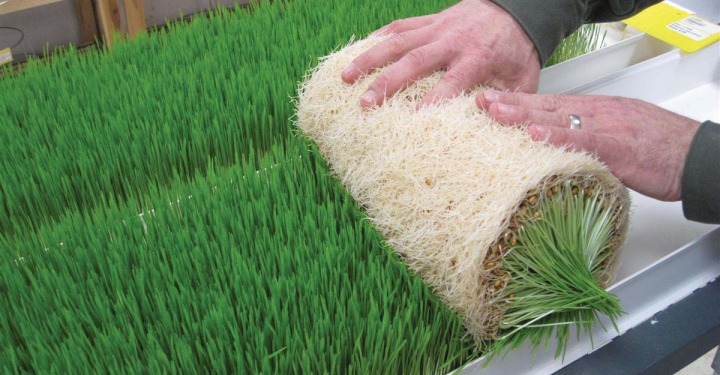
For years we’ve known about the human being health advantages of consuming sprouts & juicing greens, so why not expand the happiness to our farms? As winter is around the corner several of our livestock are relegated to dirty, dry silage; but this can be ignored by employing hydroponic technology. Through the use of a customized NFT (nutrient film technique) channel, you’re able to grow general cereal grains into mineral dense, highly edible, fresh greens.

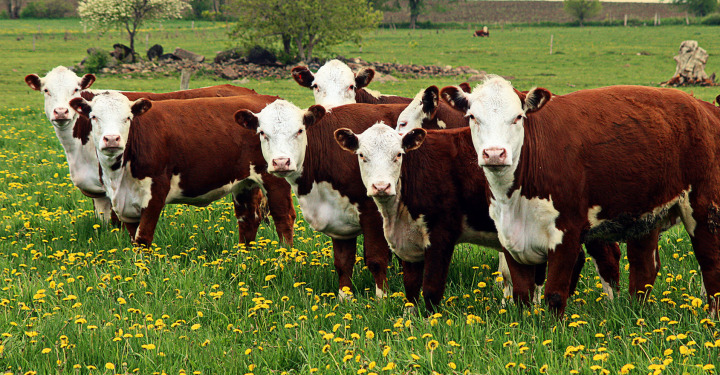
livestock-forage-hydroponics-720x375The hydroponic fodder can be produced in as little as 7 days and need no fertilizer. Some of the most common grains utilized to make hydroponic fodder are wheat, barley, and Black Oil Sunflower seeds. Several cultivators will make precise grain mixtures to cater to their individual livestock requirements, and some grain firms are even providing pre-mixed rations. This type of fodder can be nourished to a wide range of livestock ranging from chickens & turkeys to horses and cattle. The hydroponics fodder imitates these livestock’ normal diets much better than that of dried hay, and standard grain mixed rations. In several cases, nourishing hydroponics fodder in the months of winter can even help decrease the cases of foundering and colic in livestock like cows and horses.

VBK-AGRI_124842f-636x375One of the biggest obstructions that we encounter while cultivating sprouts for our livestock is producing a mold-free stuff while still upholding a higher level of sprouting. What makes this challenge is the fact that both sprouting seeds & fungal pathogens flourish in high moisture, warm conditions. By employing hydroponic NFT skill, newer fodder systems decrease ambient water and moisture loss often concerned with older misting type systems. This decrease in ambient moisture and enables us to employ these systems in a little warmer condition, motivating fertilization, but not mold expansion. Some of the most effective hydroponic fodder systems are operated in exceedingly regulated conditions employing ecological control tools often seen in indoor cultivation complexes and green house.
Hydroponic fodders are steadily getting fame with farms of all sizes. Whether you’re looking to improve the quality of your livestock’s life or to lessen the high rate of hay, hydroponic fodder is the best ever solution.

Thursday, 18 December 2014

Pesticides for Hydroponically Grown Plant

Plant lovers have grown sweet potatoes, hyacinth bulbs and various other plants in water for from a very long time. In fact, the Aztecs grew food plants in floating gardens, and the ancient Babylonians employed hydroponic methods for the legendary Hanging Gardens. When plants grown first in water, it was popularly called as hydroponics, borrowing from 2 Greek words meaning water & labor. However, in recent years hydroponic has come to include growing plants in any medium other than soil. Though plants grown hydroponically have fewer pests & diseases compared to plants grown in soil, the application of pesticides is necessary sometimes.

White flies:
 
Whiteflies injure plants by sucking their juices, which might guide to leaf drops, yellowing of leaves or stunting of the plant. Also viruses are spread through whitefly activities. More than twelve-hundred species of whiteflies subsist, but biological controls are very precise to the species of whitefly swarm, making detection of the whitefly pest is extremely crucial.

Whitefly control:
 
Use of pesticide isn’t suggested when whiteflies are an issue. Apply of insect repellents can kill organic predators of the whitefly, resulting in whitefly outbursts. Furthermore, whiteflies speedily build up resistance to insect killers. Biological control is the most recommended answer to whitefly infection on plants grown hydroponically. Big-eyed bugs, tiny pirate bugs, Lacewings and certain lady beetle species are natural opponents of whiteflies. In a conservatory setting, discharge of a small parasitic wasp can be productive. The life cycle of wasp is shorter compared to the life-cycle of whiteflies, allowing the wasp populace to grow quickly and obliterate the eggs of whiteflies through parasitism.

Spider mites, thrips and mites:
 
Make use of a hand-lens to observe hydroponically grown plants for thrips, aphids and spider mites. Indication of existence of these insect pests comprises cast skins, insect droppings, webs, discoloration or hole in leaves. Employ sanitation measures for exclusion of infected leaves when infection is negligible.

Insect control:
 
Verticillium lecanii, a fungus, is a natural opponent of thrips and aphids, and also whiteflies. The yeast attacks parasitize & destroy its hosts. Since it doesn’t damage organic enemies of thrips, it can be employed in mixture with other biological control methods. The utilization of insecticidal soap can also be employed on plants grown hydroponically to control thrips, whiteflies and aphids.

Sunday, 14 December 2014

Hydroponic Tents & Lights

Hydroponics, otherwise known as water culture is a method in which a range of plants are grown under hydroponic lights and hydroponic tents. Instead of employing soil as an agent to offer minerals to the plants, water mixed with nutrients and mineral is utilized as an agent to offer all the essential minerals and nutrients to the plant. Hydroponic farming has seen big progress, particularly in the last few years because of the bigger yield that one was able to obtain while growing the plants under hydroponic lights and hydroponic tents, irrespective of the season & weather conditions.

Market-trends-of-green-fodder-720x375However, preliminary results that came out in the 90s demonstrated that yields from plant being cultivated under hydroponic lights and hydroponic tents, aren’t all bigger than the yield from soil-grown plants. When people thought that the hydroponic system is just another joke, there was a crucial breakthrough.

Wake Island, an islet positioned in the North Pacific Ocean was the place where hydroponic had some real victory. The islet had barely any soil to grow plants, and the inhabitants here were able to get great harvest by growing plants hydroponically. One of the most important causes why hydroponic will be a big success in the near future is due to the fact that the famers can know the particular amount of water they require to employ to grow a plant, unlike growing plants in the soil-based system where they have very less idea regarding the quantity of water to be fed to it.

Since the plants’ roots are under continuous oxygen supply due to the hydroponic solution, the plants are normally much healthier. And, there’s a great chance that you can host your entire farming and gardening indoors as the lights required for the plants are supplied by the hydroponic lights & defence for the plants with the assistance of the hydroponic tents. Furthermore, the total farming expenditure less than half of what you invest in soil-farming.

Another benefit that you’ve while growing plants in hydroponic tents beneath hydroponic lights is that you can move the tent with least amount of effort & even the water being employed to grow the plants can be recycled. Everything has its own advantages and disadvantages, hydroponics too. Though the initial set up cost is a bit higher in hydroponic gardening, in the long run it saves you big.

Wednesday, 10 December 2014

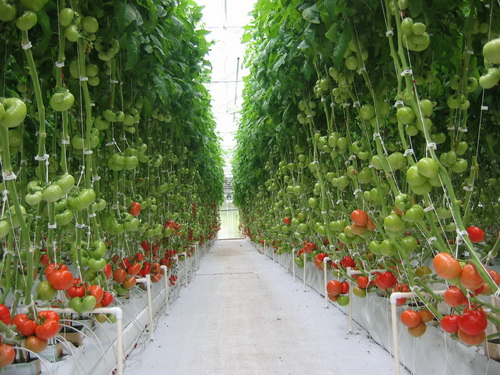
How to Grow Tomato Plants Hydroponically ?

Growing tomatoes hydroponically and tomatoes in a soil-based garden are 2 diverse procedures, each with its own advantages. The only resemblance is the similar tomato seedlings can be planted employing either means. Soil grown tomatoes have a low set-up cost with the drawback of having a risk of pest issues. Although, hydroponic growing systems have a higher primary cost for the setup, but they’ve a low danger of pest issues, and the plants can be grown all through the year indoors. Things you’ll require for growing tomatoes hydroponically are:

Hydroponic-salad1-720x375• Hydroponics system

• Hydroponic nutrients

• Soilless medium

• Netted pots

• Halide grow lights

alfaculture• Soil pH test

• Tomato support

• Ground rock sulphur

• Organic compost

• Limestone

• Tiller

Agriculturenew
• Grass clippings

• Shovel

• 10-20-10 fertilizer.

How to start?

• Bring together the hydroponic system, and fill up the pots with water. Put in the proper amount of supplements to the water based on the package directives for the quantity of water in the hydroponic system. Operate the system for about 3 days to ensure it’s working appropriately & to bring the water to room temperature.

• Fill up the netted hydroponic containers about half occupied with soilless means. Wash the tomato seeding roots with room-temperature water to smoothly take away as much soil as probable. It’s okay if a smaller quantity of soil remains on the roots. Then spread the sapling roots over the media in the container. Put in more medium about the branch to clasp the plant in place.

• Put the containers in the hydroponic system so half of the container is waterlogged & the roots are below the water level.

• Fill up the hydroponic tank with water as the level decreases from plant evaporation. Put in the supplements to hydroponic system every time water is added to preserve a proper concentration for the growth of plant.

• Set up grow enclosures around the tomato plants as they grow more than twelve inches tall to offer support before the vegetable starts to grow.

Following all these above-mentioned tips you will be able to grow red tomatoes year-round in your home garden.