Sunday, 19 April 2015

Alfaculture- Innovative Technology For Production Of Hydroponic Green Fodder

VBK-AGRI_124842f-636x375Hydroponic green fodder production or Alfculture is the most viable option for feeding sheep, goats and other livestock. The interest worldwide is increasing for hydroponic fodder as a feedstuff for sheep, goats, and other livestock. As all are aware of, Hyroponics is the science of soilless farming; it is the method of growing plants without soil. Only moisture and nutrients are provided to the growing plants. Hydroponic growing systems produce a greater yield over a shorter period of time in a smaller area than traditionally-grown crops.

Hydroponic green fodder production system or Alfaculture is a year-round growing system that produces a consistent quantity and quality of livestock feed or green fodders regardless of weather conditions.
Alfaculture units are usually used to sprout cereal grains, such as barley, oats, wheat, sorghum, and corn, or legumes, such as alfalfa, clover, or cow peas. Barley is the most commonly grown forage, because it usually gives the best yield of nutrients.

Alfaculture units usually consist of a framework of shelves on which metal or plastic trays are stacked. After soaking overnight, a layer of seeds is spread over the base of the trays. During the growing period, the seeds are kept moist, but not saturated. They are supplied with moisture and nutrients, usually via drip or spray irrigation. Holes in the trays facilitate drainage and the waste water is collected in a tank.
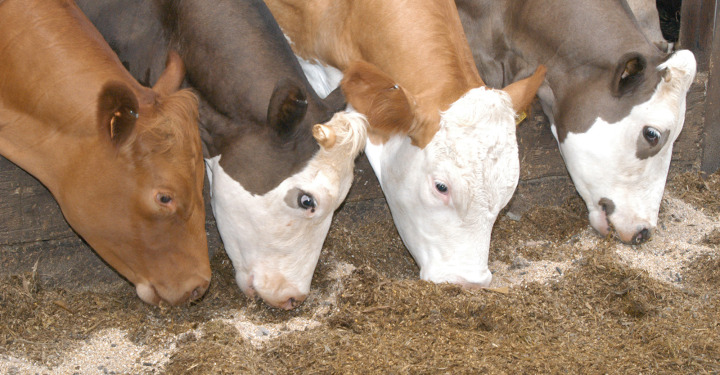
livestock_feed2-720x375The seeds will usually sprout within 24 hours and in 5 to 8 days have produced a 6 to 8 inch high grass mat. After the mat is removed from the tray, it can go into a feed mixer or be hand-fed to livestock. Livestock will eat the whole thing: seeds, roots, and grass. There is minimal waste.

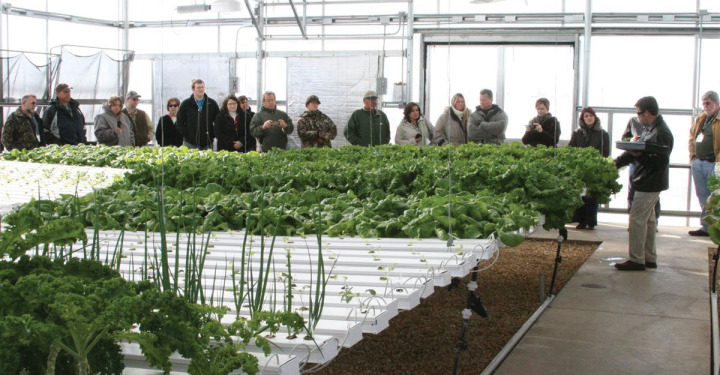
Alfaculture units can be set up in any building, including a garage or basement, a greenhouse is ideal because temperature, light, and humidity can be precisely controlled. Efficient, year-round production of green fodder is possible under optimal environmental conditions; approximately 70°F, 60 percent humidity, and 16 hours of light can produce maximum yields.

Wednesday, 15 April 2015

Alfaculture To Meet Middle East’s Increasing Livestock Feed Demand

animal-food-deficiency-700x375The Middle East and North Africa (MENA) region has been a rapidly growing market for livestock products and red meat exports in the past decade. According to the exporters from India and Australia, the MENA countries are now increasingly depending on foreign imports of cattle and sheep and demanding high value portions of quality red meet. The fast growth in the hospitality industry had lead to a major revive in the livestock industry; the increasing population in the region due to its high economic prospects is also a major growth factor.

The country is importing majority of its livestock products from other countries all over the world to meet the increasing demand. Livestock expansion projects are growing around the GCC region; despite the truth that almost all the GCC countries are highly dependent on livestock imports from other regions of the world to meet their domestic demand.

All GCC countries are exploring new ways to improve their poultry and livestock sector through enhanced domestic production. This gives an excellent opportunity for relevant product manufacturers and service providers to capitalize on this sector. The adaptation of modern agricultural practices for the production of livestock feed and the incorporation of such techniques in the livestock rearing can make wonders in the industry which indeed lead to limited export needs.

Sustainable livestock feed production requires advanced farming practices such as Alfaculture, in which the production of green fodders are carried out through the method of soilless farming- Hydroponics. Hydroponic green fodder production or Alfaculture is sustainable in many ways, as it requires only less water and arable land for the plant cultivation. Hydroponic green fodders are the most sustainable livestock feed and the best suited for the MENA region.

vertical-hydroponic-farms-537x375Cattle, sheep and goats play an important role in the emerging markets in GCC countries: their milk and meat are important protein sources for the people in the region. The production rate of livestock and dairy products in the MENA countries is higher than many other developed nations in the world. According to experts, per capita consumption of animal meat and products could rise by a further 44%, by the year 2030.

There have been sharp increases in livestock numbers in the Middle East countries, causing grazing pressures on limited arable areas to surpass their sustainable capacity; and Alfaculture or Hydroponic green fodder production is the most convenient and healthy solution to meet the issue.

Monday, 13 April 2015

Why Hydroponic Green Fodders are the best choice for livestock animals

Green fodders produced by growing seeds without soil but in water or nutrients rich solutions are known as hydroponics green fodder and the production method is termed as Alfaculture. Hydroponics green fodder production or Alfaculture is a method of cultivating livestock feed mostly in green houses under controlled environment, in nutrient rich water.

http://alfaculture.com/wp-content/uploads/2015/02/water-saving-in-hydroponics.jpgGreen fodders are staple feed for dairy animals. Dairy animals producing up to5-7 liters milk per day can be maintained exclusively by feeding green fodders. Inclusion of green fodders in ration of dairy animals decreases amount of concentrate feeding and thus increases profit. Therefore, for economical and sustainable dairy farming, fodder production round the year is highly essential.

Green fodder produced in an Alaculture system would have many benefits as it is capable to fulfill bulk of animal easily and quickly, hydroponic green fodders are a major source of vegetable protein, it is a good source of carbohydrate (soluble and fibrous) and good source of minerals. Hydroponic green fodders are rich in essential vitamins and a good source of water (approx. 15-25% water).

The Alfaculture units are built with a greenhouse (for growth of fodder) and a control unit, (for regulation of light, temperature, humidity and water) for optimum growth of fodder. And generally in an Alfaculture system, fodders are grown in trays in 7 days cycle excluding the day for seed soaking.

http://alfaculture.com/wp-content/uploads/2014/10/hydroponics-720x375.jpgIn comparison to conventional green fodders, hydroponics green fodders contain more protein, fat (ether extract) and soluble carbohydrates (nitrogen free extract); but less fiber, total ash and acid insoluble ash.

Feeding of hydroponics green fodder produced in Alfaculture units are more beneficial to all livestock due to their high nutritional values. Green fodders are highly succulent and relished by dairy animals. For instance; 7-8Kgs of Alfaculture maize green fodder can replace one kg concentrate mixture fodder. As it is highly succulent, it is recommended to offer maximum 20 kg hydroponic green fodder per day per animal.

Monday, 23 March 2015

Why Alfaculture Is The Most Practical Solution To Feed Livestock?

hydroponics-farming-a-solution-to-quality-livestock-forage-1-638Hydroponics farming for animals or Alfaculture is popular all over the world with farmers, ranchers, horsemen and zoos. It is a compact, simple, and cheap way to produce high quality green forage for farm animals. Any kind of grass or cereal grains can be sprouted in a well maintained Hydroponic growing system or in Alfaculture. Addition of any nutrient solution which is the growing media, increases the food value of the final product.

Alfaculture generally takes about five to eight days to grow from seed to an 8 inch mat of grass, packed with vitamins and minerals. Types of plants typically grown for livestock forage include alfalfa, barley, oats, clover, grass and wheat.

Alfaculture or growing livestock forage in a hydroponic system might seem like an expensive way to feed dairy or beef cattle or other livestock, but in most situations it could prove very helpful. Livestock forage may include any agricultural foodstuff used specifically to feed domesticated livestock, such as chickens, horses, pigs, cattle and goats. The term refers to food given to animals, rather than the food they feed for themselves.

downloadThere are so many companies nowadays that are offering the forage systems, as well as other systems for hydroponic growing. Alfaculture could provide producers with an excellent source of forage and cattle are able to eat the whole thing, sprout mat and all. With Alfaculture, plants can be grown in a small amount of water on a mat with added nutrients – but without soil. Alfaculture apply hydroponic or the soilless farming technology for the production of fresh feed which can be grown anywhere under any climate situation. A thousand pounds of barley, wheat or corn grows into 7,000-8,000 pounds of feed in only 10 days.

Alfaculture systems generate a much better yield over a shorter period of time in a smaller area than traditionally-grown crops. Alfaculture is a year-round growing system that produces a consistent quantity and quality of plant material, regardless of outside weather. Hydroponics Livestock forage is becoming more important to farmers worldwide due to the lack of arable farm land. For example, Alfaculture has been used by dairy producers with limited arable land. Livestock farmers can grow their forage in a soilless farming f facility, rather than having to find more land. Alfaculture allow farmers to grow any kind of fresh grass forage for their ruminants or poultries, irrespective of land or weather conditions which are the biggest obstacles for traditional green fodder production.

Thursday, 19 March 2015

Alfaculture – A Sustainable Solution For Livestock Feed Shortage

Invest in hydroponics for the production of forage might seem like an expensive way to feed dairy or beef cattle or other livestock, and in certain situations it could prove very beneficial. For instance, in drought conditions it could provide producers with an excellent source of forage. After all, cattle are able to eat the whole thing, sprout mat and all. Hydroponic forage production, also called as Alfculture can meet the issue of livestock feed shortage.

Misc-014-640x375With hydroponics, plants can be grown in a small amount of water on a mat with added nutrients – but without soil. With hydroponics, you can grow forage in a greenhouse and grow it faster – harvesting in as little as seven to 10 days. Alfaculture requires a hydroponic growing system that has been specifically developed to sprout grain and legume seeds for highly nutritious yet cost-effective livestock feed.

Hydroponic technology allows fresh feed and produce to be grown anywhere. A thousand pounds of barley, wheat or corn grows into 7,000-8,000 pounds of feed in only 10 days. Typically, farmers are widely depends alfaculture for the production of barley grass, which is rich in nutrition to feed their cattle.

Almost all kind of seeds responds to the system of Alfaculture very soon; means the farmers can have the yields within eight or ten days from the seeding. The addition of a low dose of organic fertilizer helps the successful plant growth with desired results. In an Alfaculture system, when the forage is grown, producers only need to just roll it up, grass and roots together, and feed it to their cattle.

Hydroponics is becoming more important to farmers worldwide due to the lack of land. For instance, the Alfaculture system has been used by dairy producers with limited pasture land. They can grow their forage in a hydroponic system, rather than having to find more land. And they can grow it in any climatic conditions, even it might prevent cattle from foraging for nutritious grass.

Livestock-Production-System-in-the-Middle-East1-720x375Livestock farmers around the world have to focus on more intensive farming with harsher conditions and a lack of land. It is not easy to grow good quality hay in drought conditions, and often pasture or crop land is not available or is very expensive.

Research on good quality forage which can be produced hydroponically or in Alfaculture has shown that milk yields can be increased in dairy cows, the energy and performance of ruminants is improved; and there is a higher protein content than hay so it is more easily digested.

Thursday, 12 February 2015

GRASS FODDER BY HYDROPONICS IN 8 DAYS


Grass fodder is used as an animal feed and can be produced in great numbers within 8 days from seed to grass for all livestock & even quicker with Co2 added. Various varieties of grass fodder include, but are not limited to, barley, oat grass, lucerne grass, rye grass or whatever grass one wishes to grow in ones country.For more you can visit http://alfaculture.com

Monday, 9 February 2015

Indoor Gardening Tips for Winter

Just because the winter is around the corner, it does not mean that you need to throw away your gardening gloves and kill time until spring to get your hands soiled again. People often ignore the fact that during the winter, their home offers an ideal atmosphere for plants to flourish and they can cultivate most of the fresh greens & veggies that they’d produce throughout the warmer seasons. Here in this post, we’ll discuss about few winter gardening ideas to make your indoor gardening experience a massive success:

hydroponics-346x154• Arrange adequate light – as winter takes over, the hours of sunshine sometimes look to completely disappear. Productive and cost-effective lighting is possibly the biggest difficulty people encounter as indoor gardeners. Though a sunny window may be sufficient to keep few herbs or small plants progressing, to make the most your indoor gardening space, you will wish to incorporate supplemental light. There are many artificial lights available online that you can use for your indoor gardening.

• Develop a clean working area – it can be really messy when you work with soil indoor. To assist keep soil getting all over the place you should put a dirt-free trap down prior to you do any work. This way you’ll not concerned about spilling dirt and it makes blending soil mixtures, transplanting and filling containers much more pleasurable indoors.

• Keep a stable temperature – many plants that you consume are very responsive to temperature changes. For example, Basil is especially responsive to the cold, thus, a draughty area close to an exterior outdoor wouldn’t be ideal.

• Appropriate ventilation – plant requires a decent flow of air to grow ideally. Putting a fan close to your plants indoor will make sure that they’re getting a steady flow of air. Maintaining a constant flow of air not just helps harden your plant but also keep insects at bay.

Market-trends-of-green-fodder-720x375• Appropriate humidity – maintaining a proper humidity level is very essential, but often ignored by gardeners. One great way to maintain the humidity level for your indoor garden is by positioning a cool mist humidifier beside your garden.

• Inspect properly and often – indoor gardening does have its negative side. Maintaining a clean working area and making use of products designed for indoor use help wonderfully to keep your garden pest free. Early detection and appropriate treatment will stop bugs from spreading to other parts of your indoor garden.